State of Biodiversity in the UK

Gavin Lendon • 23 April 2024

What Have We Done to Mother Nature?

Across the world, humans have encroached upon and reduced the spaces that nature requires to thrive, a trend particularly evident in the UK. 


The UK, mirroring many other nations globally, has witnessed a significant decline in biodiversity. 


Over the last 50 years our biodiversity has declined as follows:-


  • Within the UK the abundance of 753 terrestrial and freshwater species has on average fallen by 19%
  • The UK distributions of 4,979 invertebrate species have on average decreased by 13% 
  • Within the UK the distributions of 54% of flowering plant species and 59% of bryophytes (mosses and liverworts) have decreased 
  • In 2023, 10,008 species were assessed using Red List criteria of these 2% (151 species) are now extinct in Great Britain and a further 16% (almost 1,500 species) are now threatened with extinction 
  • The abundance of 13 species of seabird has fallen by an average of 24% since 1986 


(all data from the State of Nature Report 2023)


These trends are a continuation of substantial alterations to the UK's natural environment spanning centuries. Consequently, the UK now ranks among the most depleted countries in terms of its natural resources.


Living in a nature-depleted country carries significant adverse effects, including implications for human health and the direct expenses associated with adapting to the loss and degradation of ecosystem services. For instance, pollinating insects play a vital role in UK agriculture, valued at millions of pounds, yet their dwindling populations pose a threat to food production. 


Recent years have witnessed severe flooding in the UK, attributed to development in flood-prone areas compounded by the effects of climate change. The costs of permitting ongoing degradation and rectifying resultant damage are substantial, making it far more economically prudent to prevent damage proactively. Moreover, where damage has already occurred, restoring nature can often prove less costly in the long run than perpetuating degradation.


The primary reasons behind these declines are evident, as are numerous methods to mitigate their impacts and assist struggling species. 


Over the past 50 years there has been significant and ongoing changes in land management practices for agriculture and when coupled with the effects of climate change, they are the most substantial influences on wildlife on land and in freshwater habitats. 

Meanwhile, unsustainable fishing practices, climate change, and marine development represent the primary pressures on nature in marine and coastal ecosystems.


There is a growing acknowledgment of the value of nature, including its pivotal role in addressing climate change, among both the public and policymakers. With greater knowledge we have improved our monitoring of environmental changes, providing us with an unprecedented understanding of the state of nature. However, despite advancements in ecosystem restoration, species conservation efforts, and transitioning toward nature-friendly land and sea use, the overall condition of the UK's natural environment continues to deteriorate.


Over the forthcoming weeks we will look at ways we can enhance nature and perhaps address the degradation.


by Diana Sofia Moreno-Gomez 7 December 2025
In an age where “purpose” has lost its meaning, it’s time to rediscover the forces that make organisations truly resilient by reclaiming what lies at the core of strategic development. It starts with remembering why we exist, what drives us forward, and the future we dare to imagine. Then, we must activate the power of this “ Strategic Triad ” for the benefit of the whole ecosystem that sustains the organisation. This process will ground us and enable us – organisations and individuals – to thrive through today’s complex and unpredictable times. Over recent years, purpose has been dissected, redefined, and overused to the point that its meaning feels diluted into slogans and taglines. But over the past two decades of working with organisations across industries, I've learned this: purpose is the quiet, steady force that holds organisations together through change, but only when understood in its duality: Purpose as the reason for existing Purpose as the determination to become, to go further, to persist. The engine behind resilience. That’s when it becomes a true transformational anchor. However, for the yin of purpose – in its duality – to become this anchor, it must be paired with its yang: the force that delivers clarity and direction: Vision . The Strategic Triad If purpose provides meaning, and determination is the engine behind resilience, then vision helps build momentum. It's the spark that ignites hearts and minds to go beyond what once seemed possible. It's the compass that keeps organisations aligned when everything shifts. When leaders clearly define their purpose, show unwavering determination and articulate a compelling vision – while inviting everyone along for the journey – that’s when the magic happens. A clear example of the Strategic Triad can be seen in President Kennedy’s 1962 moon-shot speech: Purpose: advancing knowledge for the benefit of all. Determination: choosing the hard path because it matters. Vision: a future of innovation, new industries, shared progress, and the possibility of peace. Regardless of politics, the speech united millions behind a common ambition and helped propel the mission that reached the moon. It remains a rare moment where purpose, determination, and vision were fully aligned and lived through the space programme. Source: Full speech Beyond Statements The real value, then, isn't in crafting perfect statements - although they must be true to the core and strong enough to move mountains. It lies in the mindset change that happens while going through the process of answering fundamental questions, such as: What needs are we here to meet? What change do we want to lead? What world do we want to live in? In an era of climate emergency, AI disruption, and polarisation, these existential questions matter more than ever. They ground us when everything else is shifting. 
by Samantha Taylor 10 October 2024
Does Circularity Apply to Service Based Businesses?
by Maria Soleil 16 March 2024
Soleil Marketing's B Corp Journey (part 1)
by Tash Morgan-Etty 15 February 2024
Tash Morgan-Etty in Conversation with Sam Cande of Responsible Futures on the subject of greenwashing
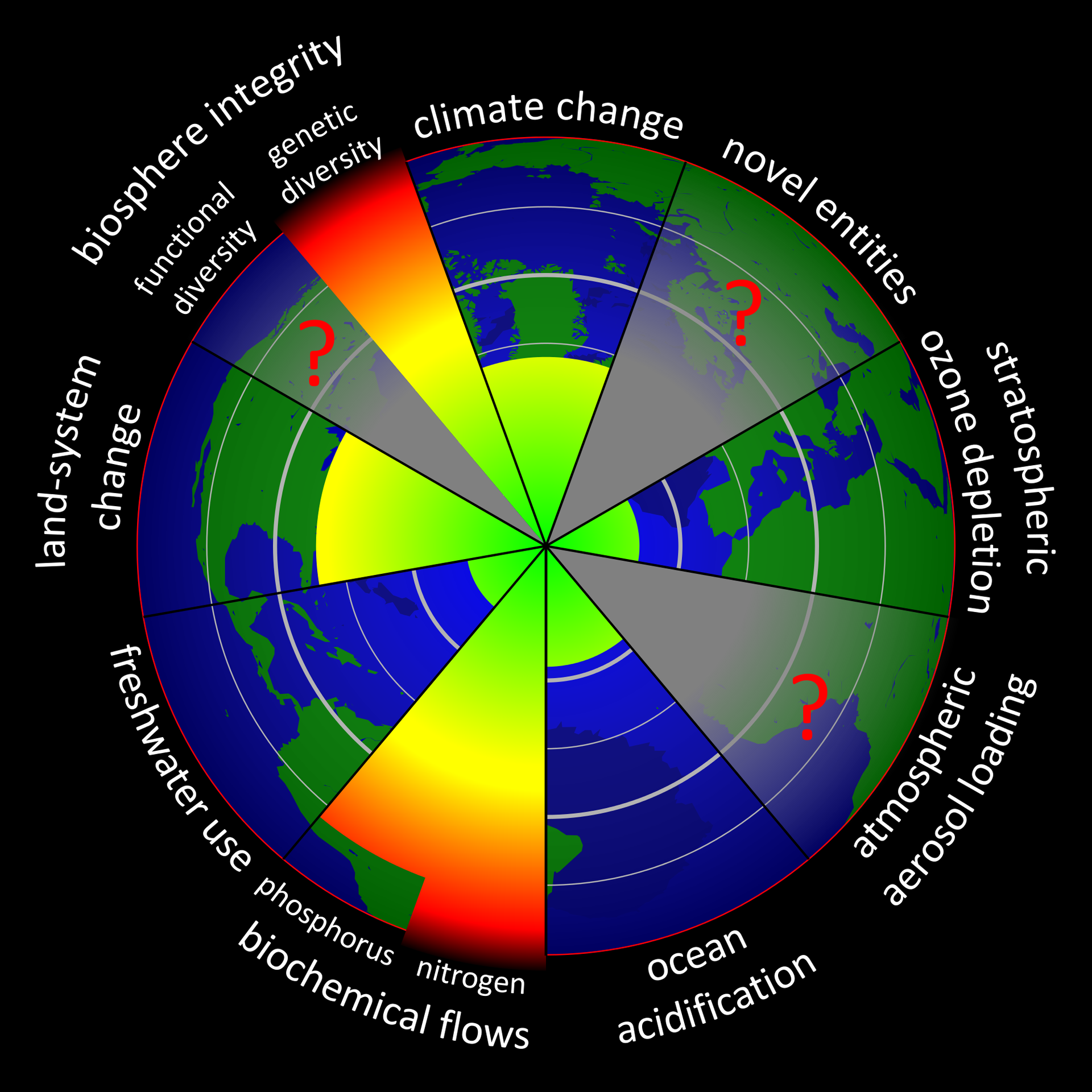
Planetary Boundaries a business perspective
by Gavin Lendon 1 May 2023
Planetary Boundaries a Business View on why they are significant
by Riccardo Sai 31 January 2023
A brief bullet point list on communicating your brand
Purpose purpose-driven
by Maria Soleil 22 January 2023
A short guide and definition to purpose driven business
by Tash Morgan Etty 15 January 2023
A guide to avoid greenwashing whilst showing how to use ethical marketing for sustainability purposes
scope 4 greenwashing or realistic reduction in emissions
by Gavin Lendon 27 February 2022
Should organisations consider scope 4 or would it be an execise in greenwashing.
by Gavin Lendon 8 February 2022
Greenwashing within the travel industry. What is it and how to avoid it.